
Richard Smallwood, Contemporary Gospel Great, Dies at 77
 themusicsover
Richard Smallwood, the Grammy-nominated gospel singer, composer, pianist, and choir leader whose music reshaped modern gospel with classical discipline and emotional depth, died on December 30, 2025. He was 77. His death was attributed to complications from kidney failure.
Born in Atlanta on November 30, 1948, and raised in Washington, D.C., Smallwood displayed extraordinary musical ability at an early age, teaching himself piano and organizing his first gospel group while still a child. He later studied music at Howard University, graduating cum laude, and became a founding member of the school’s pioneering gospel ensemble, the Celestials.
In 1977, Smallwood formed the Richard Smallwood Singers, a group that brought refined arrangements, rich harmonies, and spiritual intensity to contemporary gospel. Their 1982 self-titled debut spent an extraordinary 87 weeks on Billboard’s Spiritual Albums chart, establishing Smallwood as one of Gospel’s revered new voices while opening the door to a string of influential recordings throughout the 1980s and 1990s.
Smallwood earned eight Grammy nominations over the course of his career and became widely respected for compositions that balanced technical sophistication with congregational power. His 1996 live album Adoration: Live in Atlanta introduced “Total Praise,” a song that became one of the most enduring works in modern gospel, performed by choirs and worship leaders across denominations and continents.
His writing extended beyond the church world. “I Love the Lord” gained international recognition when recorded by Whitney Houston for The Preacher’s Wife soundtrack, while other compositions such as “Center of My Joy” became staples for gospel artists and choirs alike. Smallwood’s influence could be heard not only in gospel, but in R&B and pop, where his harmonic language and emotional directness resonated with artists across genres.
In addition to his work as a performer and composer, Smallwood was a mentor and educator, deeply invested in the spiritual and musical development of younger artists. He later earned a master’s degree in divinity, reflecting a lifelong commitment to faith that remained inseparable from his art.
What You Should Own

 Gerry Goffin was arguably America’s most prolific hit lyricist. During the second half of the 20th century, no fewer than 50 songs that he penned the lyrics for made the Top 40. Born in Brooklyn, New York, Goffin married Carole King who also happened to be his song writing partner throughout the ’60s. As part of the legendary Brill Building collective, Goffin and King wrote such pop and rock standards as “Will You Love Me Tomorrow,” “Take Good Care Of My Baby,” “The Loco-Motion,” “Go Away Little Girl,” and “Pleasant Valley Sunshine.” The seemingly endless list of artists who made their songs into hits includes
  Maurice D. Davis was a respected trumpet player who, over the course of his long career, graced over 1500 recordings. After graduating from Tennessee State University and teaching for two years at Rust College, Davis found himself in Detroit, Michigan. The year was 1965, and Davis soon found himself playing in the legendary Motown session band, the Funk Brothers. During his term that lasted until 1980, Davis played on recordings by or toured with the likes of the Supremes, the Four Tops, Stevie Wonder, Lionel Richie, and the Temptations on whose “Papa Was A Rolling Stone,” he particularly shined. Beyond Motown, Davis played with Tony Bennett,
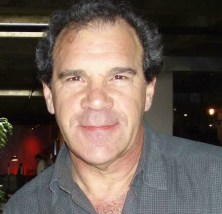 George Marino was a much-respected mastering engineer whose talents can be heard on such iconic albums as AC/DC’s Highway To Hell, Stevie Wonder’s Innervisions, Guns N’ Roses Appetite For Destruction, Bon Jovi’s Slippery When Wet,
  Donna Summer was a world-renowned American R&B singer who hit her stride during the disco era. Unlike many of her contemporaries, Summer, with her mezzo-soprano vocal range, needed very little studio trickery for her vocals. Coming of age in Boston during the early ’60s, Summer spent countless hours listening to records by and imitating the likes of the Supremes and Martha & the Vandellas. By then she had already been singing in church gospel groups. As the ’60s rolled on, Summer discovered the powerhouse vocals of
