Grateful Dead

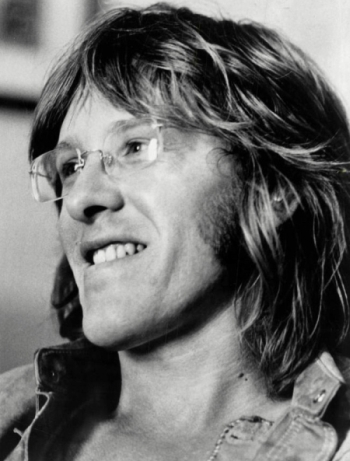
Bob Weir, Grateful Dead Co-Founder and Rhythmic Soul, Dies at 78

Bob Weir, 1975. Photo Credit: via Wikimedia

Bob Weir, the guitarist, singer, songwriter and co-founder of the Grateful Dead who helped shape more than half a century of American music, died January 10, 2026, at the age of 78. He passed peacefully, surrounded by family, after complications related to long-term lung illness following cancer treatment.

For millions of fans, Weir was never just a band member. He was a presence. A guide. A steady hand in the middle of music that could wander for hours and still feel like home.

Born October 16, 1947 in San Francisco and raised in nearby Atherton, Weir found his future in a chance teenage meeting with Jerry Garcia in Palo Alto. That encounter sparked one of the most unlikely and influential partnerships in American music. Within a few years, they had formed what would become the Grateful Dead, a band that rejected pop formulas and embraced open-ended improvisation, turning concerts into living, breathing events.

Weir’s guitar style was singular. While Garcia soared and soloed, Weir built a rhythmic framework that was loose, jazzy, percussive and constantly shifting. He rarely played traditional rhythm guitar, instead weaving chord fragments, counter-melodies and syncopated pulses that gave the Dead their elastic feel. It was subtle, but it was essential.

As a songwriter and vocalist, Weir gave the band some of its most enduring material. “Sugar Magnolia,” “One More Saturday Night,” “Truckin’,” “Cassidy” and “Mexicali Blues” carried a sense of joy, mischief and American wanderlust that balanced Garcia’s more introspective side. His voice had a conversational warmth that made the songs feel like invitations rather than performances.

Before long, the Dead became a culture, a lifestyle. Their fans followed them from city to city, trading tapes, stories and shared experiences. Weir was at the center of that world, approachable, curious, and deeply aware that the relationship between the band and the audience was as important as the music itself.

When Garcia died in 1995, many assumed the story was over. Weir refused that idea. He kept the music moving forward through RatDog, the Other Ones, Furthur, and eventually Dead & Company, introducing the Dead’s music to a new generation of listeners. His partnership with John Mayer in Dead & Company surprised skeptics and ultimately won them over, proving that the music could evolve without losing its soul.

In the summer of 2025, even while dealing with serious health issues, Weir returned to Golden Gate Park for three nights celebrating 60 years of music. Those shows were emotional, powerful, and filled with gratitude. They felt less like a farewell and more like a final statement of purpose: this music still mattered, and so did the community around it.

Weir never spoke about legacy in grand terms, but he understood the weight of what he helped create. He often said that the same song could become something new every time it was played, and that idea became a guiding principle for his entire career. Nothing was fixed. Everything was alive.

Click to find at amazon

Died On This Date (November 2, 2025) Donna Jean Godchaux / Former Vocalist For The Grateful Dead

Donna Jean Godchaux-MacKay
April 2, 1947 – November 2, 2025

Photo credit: Matt Tillett via wikimedia

Donna Jean Godchaux, the soulful singer who brought a distinctly Southern warmth to the Grateful Dead’s most exploratory era, has died at 78. She passed away on November 2 in Nashville after a battle with cancer, surrounded by family.

Born in Muscle Shoals, Alabama, Godchaux’s musical roots ran deep. Before joining the Dead in 1972, she was already part of the Muscle Shoals Sound as a backing vocalist on hits by Elvis Presley, Percy Sledge, Cher, and Boz Scaggs. That background gave her a sense of groove and precision that would later blend with the Dead’s wild improvisation, helping bridge their freeform jams with gospel-inspired soul.

Alongside her husband, keyboardist Keith Godchaux, Donna Jean became a fixture of the band’s most experimental and emotionally rich period, appearing on Wake of the Flood, Blues for Allah, and Terrapin Station. Her harmonies on songs like “Scarlet Begonias” and “Playing in the Band” added a human touch to the band’s cosmic swirl. Onstage, she brought both fire and vulnerability, matching the band’s unpredictable energy with her own fearless presence.

After leaving the Grateful Dead in 1979, she continued performing with Heart of Gold Band, various Dead offshoots, and most recently with Donna Jean Godchaux Band featuring Jeff Mattson.

Click to find at Amazon

Died On This Date (January 28, 2016) Paul Kantner / Jefferson Airplane, Jefferson Starship

Paul Kantner
March 17, 1941 – January 28, 2016

Paul-KantnerPaul Kantner was the original lead guitarist for influential ’60s counterculture rock band, Jefferson Airplane.  Although the group was founded by singer, Marty Balin, Kanter quickly took over running things, and when Balin left, he lead its new incarnation, Jefferson Starship to even greater heights.  Formed in San Francisco in 1965, Jefferson Airplane was arguably the flash point of what would become known as psychedelic rock – rock music that was created to help enhance the experience of acid, and in particular, LSD.  Along with bands like the Grateful Dead the Jimi Hendrix Experience, and Big Brother and the Holding Company, Jefferson Airplane came to represent all that was associated with the Summer of Love.  But of all the bands on the scene, it was Jefferson Airplane that was the first to gain worldwide fandom and huge success.  Besides being the only band to play at all three major American rock festivals of the era – Monterey, Woodstock, and Altamont, they scored early hits with “White Rabbit” and “Somebody To Love.”  In spite of their initial success, the band suffered from turmoil from within.  When the original Jefferson Airplane disbanded in the early ’70s, Jefferson Starship resurfaced and went to release such hit albums as Red Octopus, Earth, Spitfire and Freedom at Point Zero.  Their hit singles during this period included, “With Your Love,” “Jane,” “Miracles,” and “Count on Me.” They broke up in 1984, but Kantner and Balin reformed it in 1991, with Kanter continuing to perform and record under this moniker as recently as 2013.  In 1996, Kantner and his Jefferson Airplane band mates were inducted into the Rock and Roll Hall of Fame.   In March of 2015, Kantner suffered a serious heart attack but was able to take the stage with the band later that year to celebrate the 50th anniversary of Jefferson Airplane.  In January of 2016, Kantner again suffered a heart attack but this time it led to his death just days later. He died of multiple organ failure on January 28, 2016.  He was 74.

Thanks to Harold Lepidus for the assist.

What You Should Own

Click to find at amazon.com


Died On This Date (June 11, 2015) Ornette Coleman / Jazz Great

Randolph Ornette Coleman
March 9, 1930 – June 11, 2015

Photo by Jimmy Katz
Photo by Jimmy Katz

Ornette Coleman was one of the true greats of jazz.  As a saxophonist, he pioneered what would become to be called “free jazz.” In fact, he is often credited with actually inventing it, or at least putting a name to it, after naming his 1960 album,  Free Jazz: A Collective Improvisation. Born in Forth Worth, TX., Coleman spent much of his early career traveling around the United States performing along regional jazz circuits.  Along the way he began to incorporate country blues and R&B into his sound.  In his slower pieces, his high timbre can come across as crying, which appealed to fans of the blues as well.  In 1959, while living in New York, Coleman released The Shape of Things To Come, and a year later, Free Jazz.  Both releases broke him through in a big way and laid the foundation for the avant-garde movement of the 1960s and beyond.   In later years Coleman dabbled in rock, even performing with the Grateful Dead on occasion.  In 2007, he became the first musician to win a Pulitzer Prize – for his album, Sound Grammar.  He continued to perform and record up until the time of his death.  Ornette Coleman was 85 when he died of cardiac arrest on June 11, 2015.

Thanks to Harold Lepidus of the Bob Dylan Examiner for the assist.

What You Should Own

Click to find at amazon.com


Died On This Date (September 15, 2012) James “Sugar Boy” Crawford / New Orleans R&B Great

James “Sugar Boy” Crawford
October 12, 1934 – September 15, 2012

James “Sugar Boy” Crawford was a New Orleans R&B musician who, in 1953, wrote a song called “Jock-A-Moe,” which eventually morphed into “Iko-Iko,” one of the Crescent City’s most beloved standards.  As a singer, trombonist, and later, pianist, Crawford began performing around 1950 when he formed the Chapaka Shawee with Doctor Daddy-O. The great Leonard Chess signed him to his Chess Records and changed their name to Sugar Boy & his Cane Cutters.  In 1965, the Dixie Cups released “Iko-Iko” which sounded enough like “Jock-A-Moe,” that Crawford was eventually awarded 25% ownership.  “Iko Iko” went on to become one of the most popular songs to come out of New Orleans and could be heard in countless movies and television shows.  It has been covered by the likes of the Grateful Dead, Cyndi Lauper, Warren Zevon and Dave Matthews.  In 1963, Crawford was pistol-whipped by the police to the point that he was laid up for two years.  The beating put him into a coma and resulted in a metal plate replacing much of his skull.  When he awoke, he had lost most of his memory and motor skills which took the best of two years to re-learn.  He retired from the music business until 1969 when he returned to singing in his church only.  Crawford resurfaced during the mid ’90s to perform on his grandson, Davell Crawford’s, album and made occasional appearances at  New Orleans festivals well into the 2000s.   James “Sugar Boy” Crawford was 77 when he passed away in hospice care on September 15, 2012.

 Thanks to Henk de Bruin for the assist.